
Problem: Limited Educational Resources for a Rare and Newly Identified Genetic Disorder
The TANGO2 Research Foundation helps to fund, coordinate, and guide the work of researchers, scientists, and healthcare providers in order to improve the understanding of TANGO2 deficiency disorder. TANGO2 deficiency disorder was first identified in 2017, which means evidence-based educational resources related to this condition are few and far between. Without these resources, spreading awareness of the condition and getting critically needed support for patients is very hard.
Solution: Modular Video-Based Educational Strategy to Maximize Reach and Longevity
The TANGO2 Research Foundation was awarded a grant to create enduring educational resources. Through consultation with the Diffusion Studios team, it was determined that creating a single video that could be easily broken down into “shorts” was most appropriate. This strategy would allow the content to be used in many different ways, maximizing its reach and its value.
Results: Educational Video Series Expands Awareness Across Families and Providers
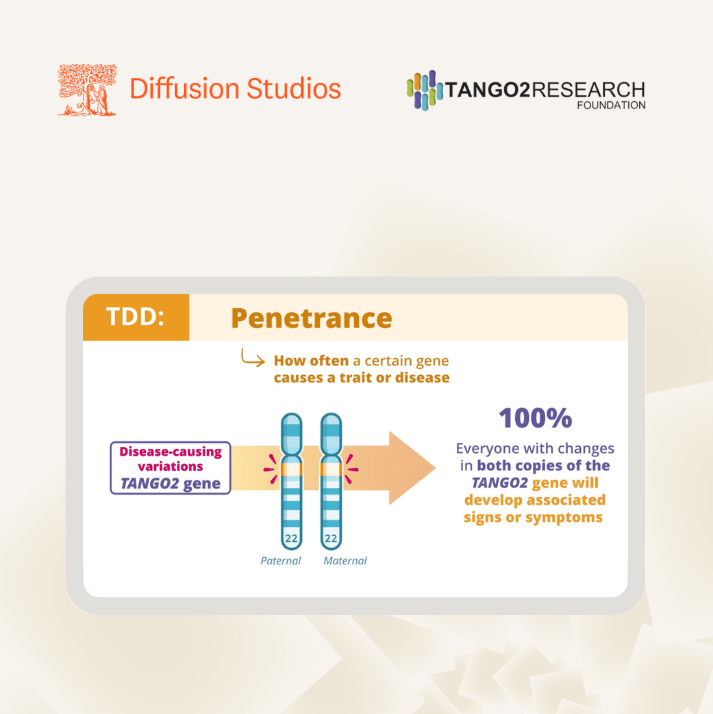
The videos have been shared on the TANGO2 Research Foundation’s YouTube channel and, to expand their reach on that platform, have also been shared in the “From Our Partners” section of the Osmosis YouTube channel. This short series has been reported to have made understanding TANGO2 deficiency disorder genetics simple enough for affected families, while remaining relevant for healthcare providers unfamiliar with the condition.
The TANGO2 Research Foundation had this to say about their experience with Diffusion Studios:
“Our project team was awesome. They were knowledgeable and responded in a timely fashion. The project exceeded expectations.”
– D. Chisholm, Research Director, TANGO2 Research Foundation
Key Takeaways
- TANGO2 Research Foundation partners with Diffusion Studios to create enduring educational resources.
- Video-based education can help address awareness gaps for rare diseases.
- Strategic distribution increases reach and long-term educational impact.